


-
de x
-
es x
-
fr x
-
Aug 04, 2026
Boost your concentration: What your body and mind really need
Read the same sentence three times and still not taken it in? Improving your concentration sounds like a willpower problem — but it's usually a foundations problem: sleep, nutrient supply, and a nervous system that has enough energy left to perform. This article gives you concrete everyday tips and shows what the research actually says about each lever.
One piece many people overlook: your gut. See our recommendation for it.
Jump to recommendation ↓On this page
What's really behind slipping concentration
Concentration problems are almost never down to a single cause. Usually it's a mix of factors reinforcing each other:
- Lack of sleep: Just a few nights of noticeably shortened sleep measurably worsen attention and reaction time.
- Chronic stress: Persistently elevated stress hormones affect exactly the brain regions responsible for focused attention.
- Nutrient gaps: A shortfall in B vitamins, iron, magnesium, or omega-3 fatty acids is frequently linked to concentration issues.
- Environment and overstimulation: Constant notifications and multitasking cost more mental energy than most people consciously register.
Concrete tips to improve your concentration
The good news: unlike an actual nutrient deficiency, most of these levers are directly within your control. These tips help fastest:
- Fixed sleep timesGo to bed and get up at roughly the same time — 7 to 9 hours is the foundation everything else builds on.
- Pomodoro-style breaks25 minutes of focused work, then a deliberate 5-minute break. Your brain needs the recovery to stay sharp afterward.
- Single-task instead of multitaskOne task at a time. Constant switching costs more time and energy than it saves.
- Reduce visible distractionsKeep your phone out of sight and batch notifications. Just seeing your phone measurably pulls attention, even on silent.
- Short movement breaksA few minutes of walking or stretching improves circulation — and with it, oxygen supply to the brain.
- Drink enough waterEven mild dehydration can noticeably impair attention and thinking. Keeping a large glass of water within reach helps more than people expect.
- Daylight and fresh airA quick trip to the window or outside signals alertness to your body — often faster than the next coffee.
- Keep an eye on nutrientsYour brain literally needs energy to stay focused. B vitamins have a substantiated contribution to normal energy metabolism and normal nervous system function1 — when one of these building blocks is missing, concentration is often the first thing to slip. Your gut plays a role too: it determines how well your body can absorb these nutrients in the first place. That's exactly where our recommendation, Glow25 Balance below, comes in. Some people also swear by creatine — the evidence here is promising but not yet conclusive2.
Our recommendation: Glow25 Balance
One piece that's often overlooked when it comes to concentration: your gut. It plays a role in how well your body can absorb nutrients in the first place — and that's closely tied to energy levels and mental clarity.
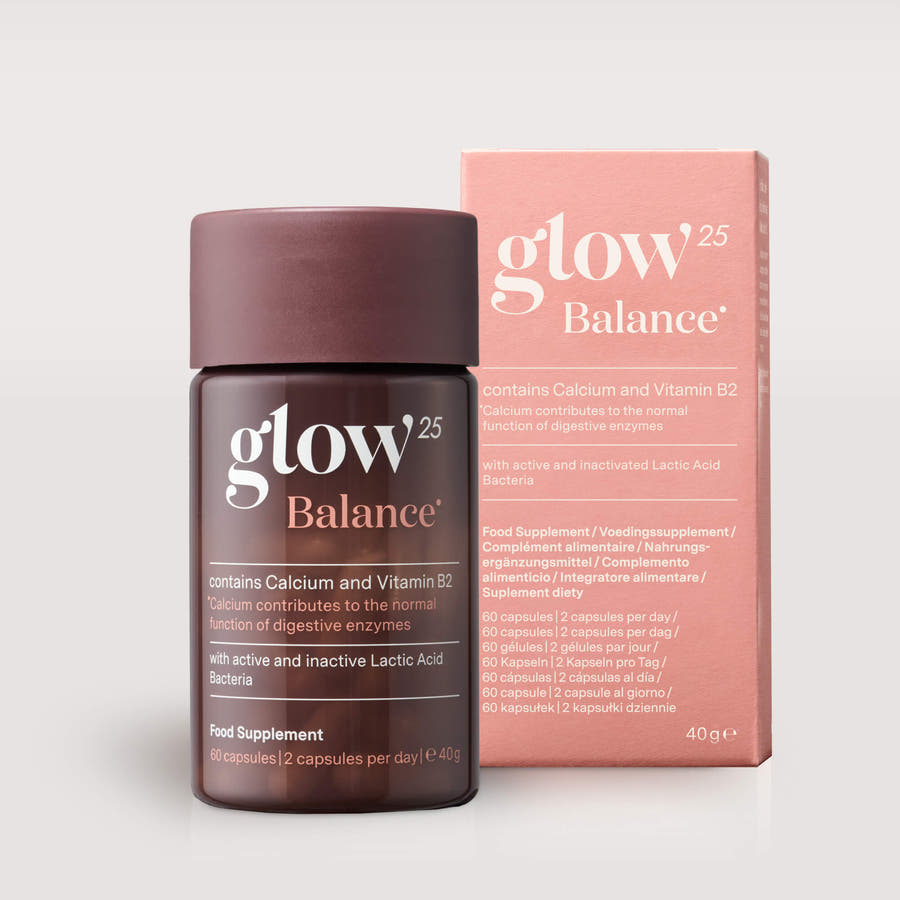
Glow25 Balance – Gut Balance Capsules
Tribiotic formula with active & inactivated lactic acid bacteria, golden kiwi extract, and inulin, complemented by vitamin B2 and calcium.
- Vitamin B2 contributes to normal energy metabolism and normal nervous system function – the foundation for a clear, focused head1
- 3-in-1 tribiotic formula for the gut microbiome, through which the gut-brain axis is currently being explored as a possible factor in mental clarity3
- Not a short-term pick-me-up, but a foundation that carries you through the day
- Simple routine: 2 capsules daily with water
What customers concretely like about Balance
A pattern keeps showing up in reviews and experience reports about Glow25 Balance: many users describe the familiar early-afternoon slump easing noticeably once their gut feels "in balance," alongside less bloating and an overall lighter feeling. Others mention feeling less drained and less "foggy-headed" since taking Balance consistently. These are individual experiences, not clinical endpoints — but they line up with what current research into the gut-brain axis is exploring3.
Why Glow25 stands out here
Instead of relying on a short-term pick-me-up, Glow25 Balance addresses the foundation: a microbiome that can reliably absorb nutrients, combined with two nutrients whose contribution to energy metabolism is recognised under EU law. The 3-in-1 formula of pre-, pro-, and postbiotics fits easily into two capsules a day.
Common reasons for satisfaction
- Simple intake: two capsules, a large glass of water, done
- Not a coffee substitute, but a foundation that carries you through the day
- Combines easily with any collagen routine (ideally spaced apart)
- Many report first noticeable changes after around four weeks
Who this is especially worth it for
Screen-heavy jobs
Long hours of focused desk work often make afternoon slumps hit hardest.
Busy parents
Irregular sleep and constant stress drain mental energy reserves fastest.
Active, sporty people
Balancing training with mental performance benefits from a solid energy foundation.
Demanding life phases
Exam periods, big projects, or menopause can all disrupt concentration and energy together.
Sleep-and-stress optimisers
For anyone already working on sleep and stress, now adding the nutrition and gut piece.
Frequently asked questions
How quickly does better sleep improve concentration?
Often noticeable after just one or two nights of adequate sleep. A stable improvement, though, needs a consistent routine over weeks rather than a single catch-up night.
Does creatine really help with concentration problems?
A recent meta-analysis found positive effects on memory and processing speed, but not on overall cognitive function2. Promising, but not yet conclusively proven.
Which nutrients matter for concentration?
According to EFSA, several B vitamins (including B2, B6, and B12) have a substantiated contribution to normal energy metabolism and normal nervous system function1. This doesn't replace diagnosis of an actual deficiency.
Can your gut really affect concentration?
The gut-brain axis is an active research field3. Studies show early effects of probiotics on brain regions tied to attention, though evidence in healthy adults remains preliminary rather than conclusive.
How long does it take before a new routine makes a difference?
It varies. Sleep and environment changes often show effects within days; nutrition and gut-related changes usually take several weeks.
Is coffee bad for concentration?
In moderate amounts, caffeine can boost alertness short-term. As a sole strategy it's not very sustainable, since high intake can disrupt sleep and worsen concentration problems the next day.
Conclusion
Improving concentration is rarely about a single trick. Sleep, environment, and nutrient supply all work together. Taking the fundamentals seriously and giving your gut the right support builds the foundation for a clearer head — no miracle cure required.
See our recommendation ↑Scientific sources
- EFSA Scientific Opinion: vitamin B12 and several other B vitamins contribute to normal energy metabolism and normal nervous system function, and help reduce tiredness/fatigue. efsa.europa.eu ↩
- Xu et al. (2024), Frontiers in Nutrition: meta-analysis on creatine monohydrate and cognitive function — significant positive effects on memory and processing speed, no significant effect on overall cognitive function. pmc.ncbi.nlm.nih.gov. More in our article When and How You Should Really Be Taking Creatine. ↩
- Crocetta et al. (2024), Frontiers in Nutrition: systematic review of probiotic effects on brain activity (measured via fMRI) in healthy adults. ncbi.nlm.nih.gov ↩


